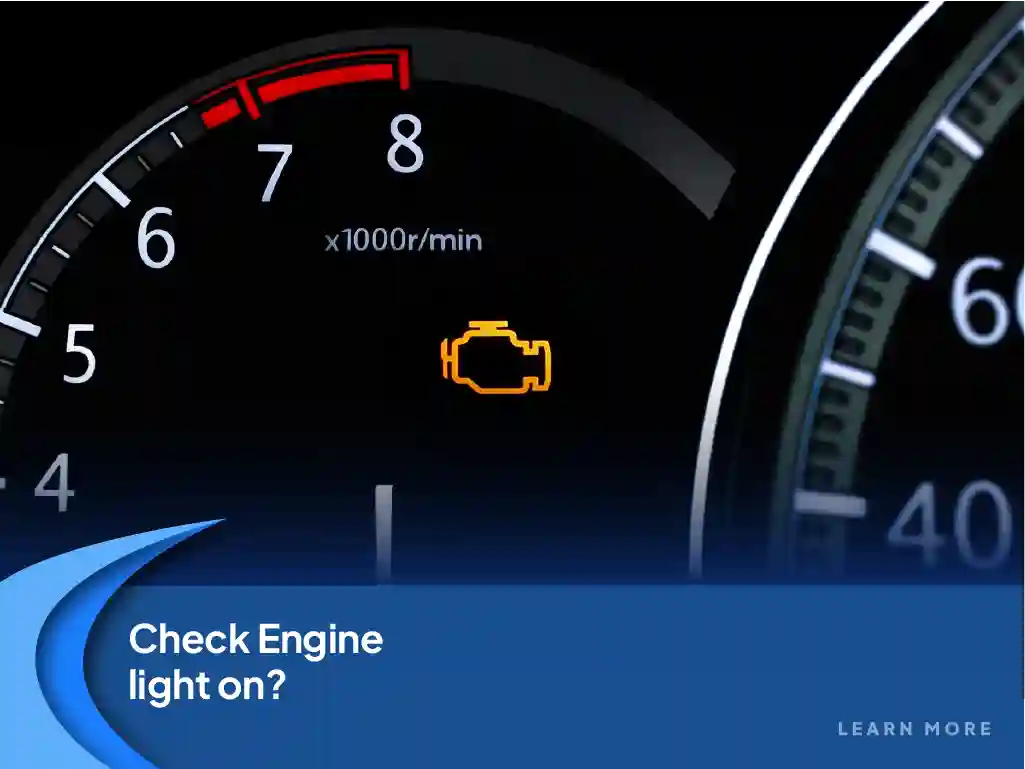
A check engine light means your car’s onboard computer has logged a fault somewhere in the engine, fuel, ignition or emissions system. It could be something as cheap as a loose fuel cap, or as expensive as a failed catalytic converter. Nobody – including your mechanic – can tell which one just by looking at the car. A diagnostic scan is the only way to find out, and until it’s done, any price you’ve been quoted is guesswork.
What Does the Check Engine Light Mean?
The check engine light is part of your car’s onboard diagnostics (OBD) system. Sensors monitor how the engine, fuel and emissions systems are running, and when a reading falls outside the expected range, the computer stores a trouble code and switches the light on.
The light tells you a fault exists. It doesn’t tell you what the fault is. That’s what the stored code is for, and reading it requires a scan tool plugged into the car’s OBD port.
Solid light vs flashing light
- Solid (steady) light – a fault has been logged, but it isn’t an emergency right now. Common causes include a loose fuel cap, an ageing oxygen sensor or a small vacuum leak. Book a diagnostic scan soon.
- Flashing light – treat this as urgent. A flashing check engine light often means a severe misfire sending unburnt fuel into the exhaust, which can damage the catalytic converter very quickly. Stop driving and get help.
If the light is on and the car is overheating, losing power, making a new noise or showing an oil pressure warning, stop driving regardless of whether it’s flashing.
What to Do When the Check Engine Light Comes On
Check the dash for other warnings – oil pressure and temperature lights matter more than the engine light.
Note how the car is behaving – rough idle, misfiring, loss of power, smoke, unusual smell.
Check the fuel cap. A loose, cracked or missing cap is one of the most common and cheapest causes. Tighten it until it clicks. The light may take a few driving cycles to clear.
Don’t just reset the light. Clearing the code without fixing the fault only hides the problem, and it erases information the mechanic needs.
Book a diagnostic scan. This is the step that tells you what you’re actually dealing with.
If the light is flashing, stop driving and arrange for the car to be towed or inspected.
Common Causes of a Check Engine Light (and What They Cost)
A trouble code points to a system, not always to a specific failed part. A code pointing at the oxygen sensor, for example, can be caused by the sensor itself, by a vacuum leak, or by a failing catalytic converter — which is why a proper diagnosis matters more than a free code read.
Common cause | Typical repair cost in Australia | Source |
|---|---|---|
Loose or faulty fuel cap | Usually under $50 | Cheapest and most common cause |
Mass airflow (MAF) sensor | $50–$340 | AutoGuru |
Spark plugs | $100–$300+ | AutoGuru |
Ignition coil | $200–$400+ | AutoGuru |
Oxygen (O2) sensor | $225–$500 per sensor | AutoGuru |
EGR valve | $100–$1,000 | AutoGuru |
Catalytic converter | $300–$3,000, averaging about $1,275 | AutoGuru |
Catalytic converter (second estimate) | From $500 up to $2,000–$3,000, averaging about $1,000 | mycar |
A note on catalytic converters: they are consistently the most expensive check engine light repair. CarMD’s 2026 Vehicle Health Index, based on more than 39 million vehicles’ service records, ranked catalytic converter replacement as the most common check engine light repair, with an average cost of US$1,511, followed by oxygen sensor replacement at US$287. Those are US figures, but the ranking holds in Australia too. If you’ve been quoted for a converter.
How Much Does a Diagnostic Scan Cost in Melbourne?
Most Melbourne workshops charge for diagnosis as a separate job, priced on the time it takes rather than a flat fee, so ring two or three for a quote on your make and model.
Some auto parts stores offer free code reading. That’s useful for a rough idea, but it only reads the stored code. It doesn’t test whether the part named in that code is the part that has actually failed — and replacing the wrong part is a common and expensive mistake.
For an older car, the diagnostic fee is worth weighing up on its own. If you already suspect the car isn’t worth repairing, you may prefer to get a cash offer first and skip paying to diagnose a car you’re not going to fix.
Can You Keep Driving With the Check Engine Light On?
It depends on the light and the symptoms.
- Solid light, car driving normally – generally safe for short trips, but book a scan. Ignoring it lets small faults become expensive ones. A failing oxygen sensor left alone can destroy a catalytic converter.
- Solid light with poor running, smoke or odd noises – get it checked before driving further.
- Flashing light – stop driving. Severe misfires can damage the catalytic converter within minutes.
Keep in mind a practical point too: a car with an engine light on will generally fail a roadworthy inspection and is much harder to sell privately, because buyers assume the worst.
When the Repair Bill Beats the Car’s Value
Your situation | Usually makes sense to… |
|---|---|
Loose fuel cap or a single sensor on a healthy car | Fix it |
Spark plugs or one ignition coil | Fix it -usually cheap relative to value |
Catalytic converter quote on a car worth under about $4,000 | Compare the quote with a cash offer |
Engine light plus a failed roadworthy, or tyres and brakes due | Sell it as-is – the costs stack up |
Flashing light with confirmed internal engine damage | Sell it as-is |
Multiple fault codes across different systems | Get a cash offer before you pay to chase each one |
The rule of thumb most mechanics use: if the repair quote is more than about half of what the car is worth, selling usually comes out ahead. For help working out that value, see how much your car is worth.
Selling a Car With a Check Engine Light in Melbourne
You don’t need to fix the fault, clear the code or get a roadworthy certificate before selling to a car removal company. Just describe what the car is doing – the light, any symptoms, and the diagnosis if you have one.
What affects the offer:
- Make, model, year and kilometres
- Whether the car still drives
- What the fault is, if known
- Overall condition, including body, tyres and interior
Being upfront is in your interest. A clear description means the quote you get on the phone is the quote you get on pickup.
How City Cash 4 Cars Buys Cars With Engine Faults
City Cash 4 Cars is a Melbourne car removal company based in Campbellfield, VIC, that buys old, damaged, faulty and unwanted vehicles and provides free towing across Melbourne. We buy cars with check engine lights, failed emissions parts and engine faults – running or not.
Tell us about the car – make, model, year, kilometres and what the light is doing. Call +61 457 063 569 or request a free quote online.
Get an upfront quote based on the car’s real condition.
We tow it free from anywhere across Melbourne, even if it won’t drive.
We handle the paperwork and you get paid when we collect your car.
See our damaged car removal, cash for cars and old car removal services.
Frequently Asked Questions
Why is my engine light on?
Your car’s computer has detected a fault in the engine, fuel, ignition or emissions system and logged a trouble code. Common causes include a loose fuel cap, a failing oxygen sensor, a mass airflow sensor fault, worn spark plugs or ignition coils, and catalytic converter problems. A diagnostic scan is the only way to know which.
What should I do when the check engine light comes on?
Check for other dashboard warnings, note how the car is driving, and check that the fuel cap is tight. If the light is solid and the car drives normally, book a diagnostic scan. If the light is flashing, stop driving and get the car checked straight away.
What does the check engine light mean?
It means the onboard diagnostics system has logged a fault code. A solid light indicates a fault that needs attention soon. A flashing light usually indicates a severe misfire that can damage the catalytic converter quickly and needs immediate attention.
Can I drive with the check engine light on?
A solid light with the car running normally is usually safe for short trips until you can get it scanned. A flashing light, or a solid light combined with poor running, smoke, overheating or unusual noises, means you should stop driving.
How much does it cost to diagnose a check engine light?
Most workshops price diagnosis on the time it takes rather than charging a flat fee, so it’s worth ringing two or three for a quote on your make and model. Some parts stores read codes for free, but that reading only tells you which code is stored – it doesn’t confirm which component has actually failed.
What is the most common reason for a check engine light?
A loose, cracked or missing fuel cap is the most common and cheapest cause. Oxygen sensor faults and catalytic converter problems are the most common causes that lead to significant repair bills.
Can I sell a car with the check engine light on?
Yes. City Cash 4 Cars buys cars with check engine lights and engine faults across Melbourne, running or not. You don’t need to repair the fault, clear the code or get a roadworthy certificate first.

We are a Melbourne based vehicle removal company helping individuals and businesses remove unwanted vehicles quickly and responsibly. We handle pickup, paperwork, and removal with a simple, transparent process.